Abstract
3D Gaussian splatting represents detailed scenes with large collections of transparent, view-dependent primitives, but tracing rays through many overlapping Gaussians is difficult to do efficiently. Rasterizers use approximate per-view sorting, while prior ray tracers may require specialized RTX hardware and exhaustive intersection processing. We introduce a stochastic alternative: during one acceleration-structure traversal, every hit is probabilistically treated as opaque or transparent according to its opacity, and only the nearest accepted hit is shaded. This removes per-ray sorting and large intersection buffers, reduces register pressure, and preserves GPU parallelism. The resulting Monte Carlo estimator is unbiased, converges with low variance, and makes rays through Gaussian assets comparable in cost to ordinary mesh-intersection rays. It also fits naturally into production path tracers and runs interactively across GPU and CPU implementations.
Path-tracer integration
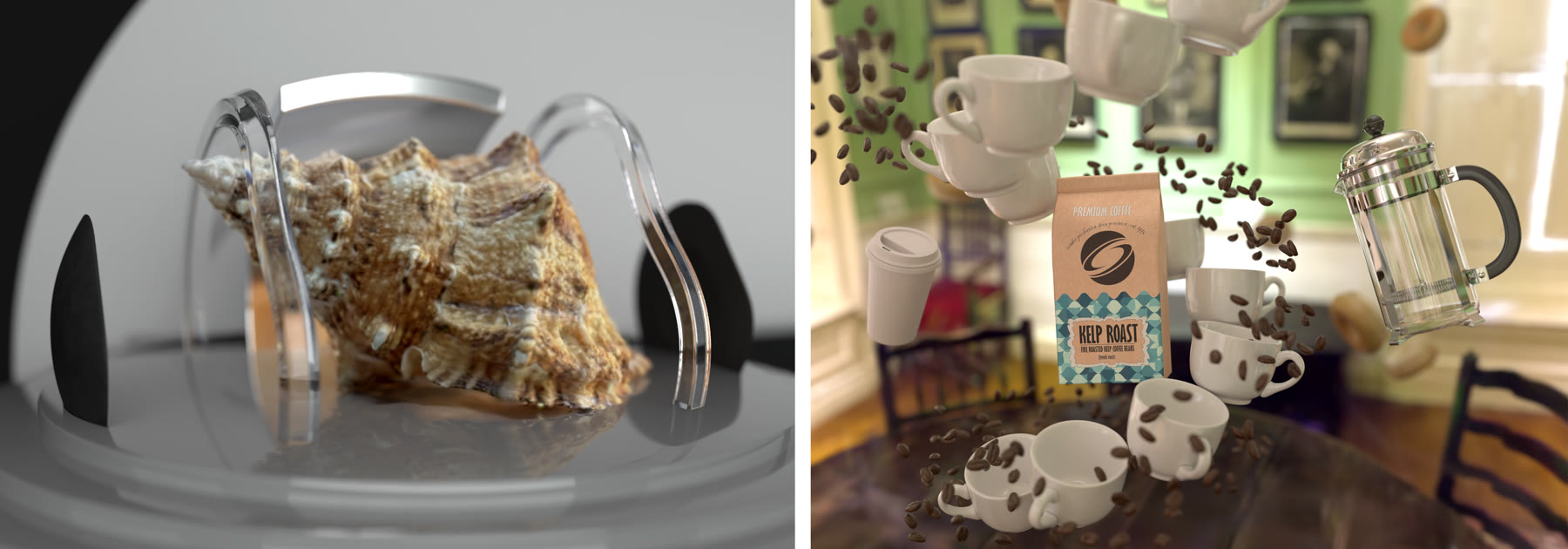
Gaussians and meshes, together
Gaussian reconstructions participate naturally in secondary effects and can be composed with conventional geometry and physically based materials.
Quick method intro
Turn opacity into a stochastic event
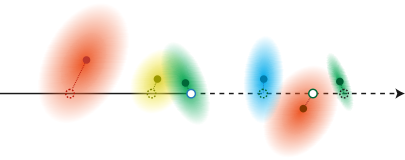
- Trace once. A BVH finds candidate Gaussian intersections in any traversal order and issues callbacks.
- Accept by opacity. A hit with opacity α becomes fully opaque with probability α; otherwise it is skipped.
- Shade the nearest accepted hit. Each ray shades at most one Gaussian.
- Accumulate over samples. Averaging these outcomes gives the same expected radiance as ordered alpha compositing, without storing or sorting the full hit list.
Key results
Fast convergence
Even one sample per pixel gives a recognizable result; most stochastic-opacity noise is gone by 64 spp.

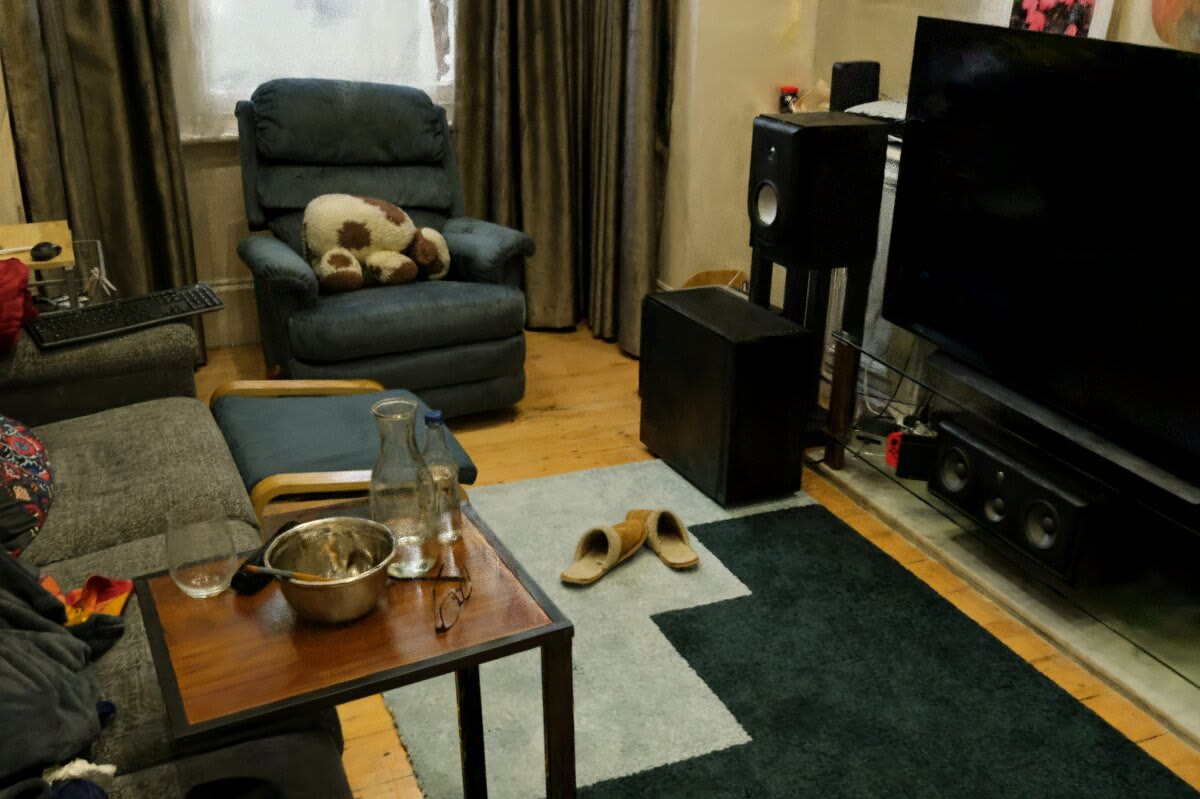
On the 1.28M-Gaussian room scene and an RTX 3090, versus 34.3 ms for 3DGRT. Rasterization remains faster at 3.9 ms, but does not provide the same general path-tracing effects.
Applicability
One renderer, different Gaussian assets
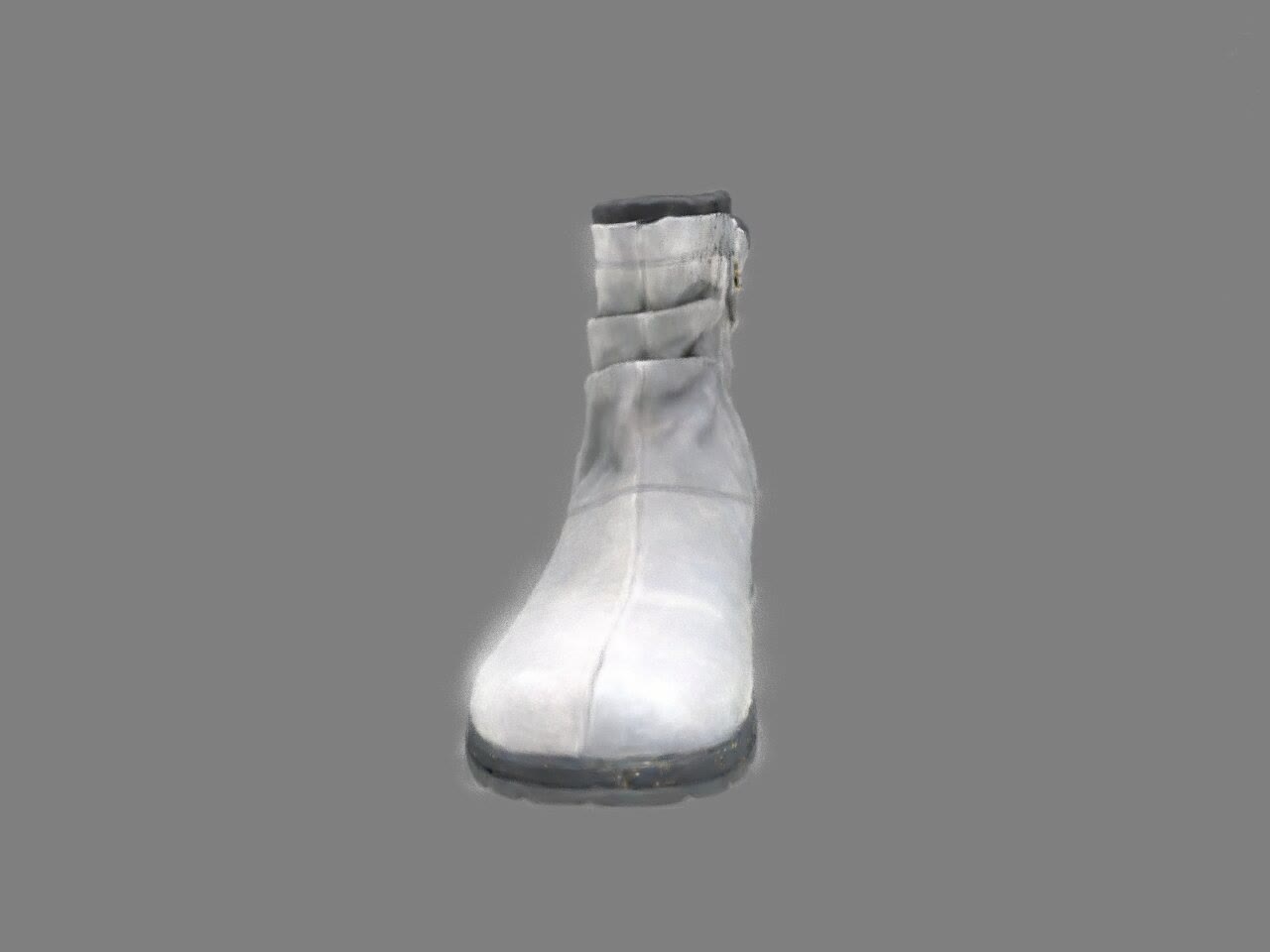
The method works with text-generated and LRM-reconstructed objects, single-object captures, and scene-scale reconstructions. The definition of color (constant, SH, relightable) can be arbitrary. The method supports 2D Gaussians and in fact any primitive whose intersection position, opacity and color along a ray can be defined.


BibTeX
@inproceedings{sun2025stochastic,
  title     = {Stochastic Ray Tracing of Transparent 3D Gaussians},
  author    = {Sun, Xin and Georgiev, Iliyan and Fei, Yun and Ha\v{s}an, Milo\v{s}},
  booktitle = {Eurographics Symposium on Rendering},
  year      = {2025},
  doi       = {10.2312/sr.20251191}
}